Sunday, September 22, 2019

Positioning and Segmenting Positioning Penfold in China


In this assessment, you will continue to use the country and focus organisation you worked on in Assessment 1. Here you will develop the next steps in their international marketing plan.
Part 1 of Assessment 2 requires you to evaluate all realistic market entry options for this organisation in your target country market (typically at least three, including your preferred option). These options should be discussed, covering advantages and disadvantages, how they might work and reasons for adopting or discarding each one, within the context of your company and the chosen market.
In Part 2 of Assessment 2, it is now necessary to identify potential market segments (target markets) in the chosen country and consider how they might be serviced by your organisation. You must show your understanding of the concepts involved and your ability to think through and express marketing strategy options. In justifying your choice for the STP strategies, you must:
·        Explain the strategic approach you used to segment the market, and justify why you have selected particular target market segment(s) in the chosen market. These may be within the B2B sector, B2C or a combination; and
·        Identify your recommended positioning strategies for each target market.

Positioning and Segmenting Positioning Penfold in China 

Introduction

International marketing is one of the different levels of marketing. Marketing is divided into a domestic market, global market and international market. Global and international market are having similar characteristics and common crossovers are shared by them. Although domestic marketing and international marketing are very different and a lot of work and thought is required by the firm when they shift from domestic marketing to international marketing (Doole & Lowe, 2008).
In this assessment, the Chinese market is being evaluated for Penfolds. Recently, China is one of the fastest growing markets of consumption and development. The Chinese market is huge and very versatile. Hence, Penfolds needs to make a proper assessment of their target market and their positioning in the Chinese market (Schiffer, 2005).
Recently, researchers are paying attention to the marketing entry strategy of the organizations. Bishop and J.A.C.Q.U.I. (2006), stated that this research can be divided into three categories, direct exporting, direct investment and indirect exporting. According to them the most expensive form of the entry is direct investment whereas the cheapest strategy is indirect exporting.
Each company entering the market of China has to choose their own appropriate strategy. Their strategy depends upon a number of things which are unique to them, such as the potential for growth, resources of the company, their commitment, timeframe etc. All of these factors are to be considered and assessed while choosing the strategy of any company entering the Chinese market (CBBC, 2016).

Market Entry

According to Doole & Lowe, (2008) the most significant decision that any company makes while entering a new market is how they are going to enter the market. This decision affects every aspect of their business in the long run. There are various ways through which a company can enter the market. All these strategies have their own advantages and disadvantages of entering the market (Chung & Enderwick, 2001).
There are various ways through which any company can enter the Chinese market. Those market entry options are:
·       Direct sales/export
·       Agent or distributor or licensing
·       Franchising
·       Representative Office (RO)
·       Joint Venture (JV)
·       Wholly Foreign Owned Enterprise
·       LaunchPad
The three entry methods through which Penfolds can enter the Chinese market are Wholly Foreign Owned Enterprise (WFOE), Joint Venture (JV) and by using Agent/Distributor.

Using Agent/Distributor

An agent is hired to be a direct representative of your company and is usually paid either a monthly fee or commission fee for helping in representing the company and selling the products of the company whereas a distributor is not hired by the company. The distributor buys the products from the company and then they further sell it to the customers through a third party or directly. The income of the distributor is the difference between buying and selling cost.
This phenomenon is known as indirect exporting. It is a common practice for companies to export their products in China through Agents or distributor (EU SME Centre, 2013). Getting your products sold in China by some domestic agent or distributor is the cheapest way for any company to enter the Chinese market (Doole & Lowe, 2008).
There are various advantages as well as disadvantages of using agent/distributor for entering the Chinese market. Those advantages and disadvantages are listed below (EU SME Centre, 2013 and CBBC, 2016).

Advantages

·       Local presence of the exporting company is not required
·       The company can get access to the existing network of the agent or distributor
·       After-sales support can be easily provided through domestic agents or distributors
·       They can help the company in launching new products as well as in gaining the insights of the market.
·       The company is not obliged to keep the stock for the Chinese market instead agents and distributors are responsible for keeping the required stock.
·       The company only needs to keep the account of the agents and distributors, the account of the customers will be handled by the agent and distributor.

Disadvantages

·       Companies have almost no control over their representation to the target market.
·       The work of agent/distributor is to be reviewed and their queries have to be solved by the company. It increases the responsibilities of the company.
·       Having an agent or distributor requires a lot of communication and miscommunication can create disputes.
·       Partner training might be required for using agents or distributors.
·       Agents and distributors might be selling products of the competing companies to your target market.

Joint Venture (JV)

Joint Venture is to combine the value chain activities of at least two organizations for gaining the competitive advantage (Ireland et al., 2002). While making Joint Venture a company has to carefully analyze the approach which will be adopted for the alliance. In joint ventures ownership as well as the profits are to be shared by the company with the partner company (Doole & Lowe, 2008). If Penfolds chooses to form a joint venture in China then they have to first choose a company with which it would like to join hands and then it has to proceed further. Moreover, choosing a partner is a very critical process, Penfolds has to see the compatibility of their business with other companies.
According to Doole & Lowe, (2008), EU SME Centre, (2013) and CBBC, (2016) following are the advantages and disadvantages of Joint Venture:

Advantages

·       If Penfolds goes for joint venture then they will be able to benefit from the connections and resources of their partner companies.
·       It is one of the low-cost entry methods.
·       This gives more control to both the businesses involved in the joint ventures.

Disadvantages

·       Confusion can occur regarding the managerial responsibilities of the partner companies
·       If for any reason Penfolds decides to exit the market then it will be difficult for them to do so in a joint venture. Creating exit strategies is complicated in Joint Ventures.
·       Joint Ventures also gives a lot of limitation in the business operations of the Penfolds.
·       When two companies work together then they are bound to have conflicts and disputes in the management, this will create a lot of disturbance in the operations of the venture.

Wholly Foreign Owned Enterprise (WFOE)

This is one of the forms of direct foreign investment. In this method of entry, Penfolds is going to acquire assets in China and start their business operations over there. (Moosa 2002).  Penfolds will be having limited liability if they enter Chinese market through WFOE. Furthermore, they stated this is the most expensive strategy among other strategies for entering the market. It is a traditional direct investment method; it offers the benefits of getting total incomes and full control over the foreign subsidiary. This strategy takes a long time in developing and their stability rate is also higher than the other methods.

Advantages

·       Wholly owned foreign enterprise has the whole control on the operations of the organizations, they have to give no consideration to any other partners or stakeholders except for the ones they already have in their organization.
·       100% profits are taken by the firm

Disadvantages

·       Costly and time-consuming
·       Talented is to be recruited by the firm for the new enterprise
·       Penfolds will not be getting any assistance from any partner since they are alone.
·       Owner of the Penfolds and their key employees might have to shift to China. (CBIZE, 2018 & EU SME Centre, 2013)

Market Entry of Penfolds

There are three realistic options for Penfolds to enter the Chinese market. Among all three of them, Penfolds should go for a joint venture. Joint Venture is the recommended option because it gives control to the firm. Moreover, Penfolds itself is going to represent their products. Equity joint venture and cooperative joint ventures are the two forms of joint ventures which are usually formed in China. In the equity joint venture, profits, risks, and losses are shared among the partners according to the equity stakes of the partners whereas the cooperative joint venture is more flexible and the sharing of profit, risk, and losses is according to the contract, made by firms for the joint venture (PwC, 2018).

Potential market segments

Market segmentation is a central concept in marketing. Most of the marketing activities are depending upon the market segmentation of your business (Wedel & Kamakura, 2000). Marketers know that all the customers of their target audience of a specific product are not similar. They all differ in different terms, such as demographics, location, attitudes etc. Segmentation of the market allows firms to focus on the needs and wants of those segments and deliver those appropriate products or services (Pickton and Broderick, 2005).
Wine market of China is huge and is not a unified market because China is owning the second largest territory in the world. China has people of different culture, religions, nation and their wine market has significant differences among the people. It is very important for Penfolds to choose their market segments and focus on them (SÜMEGI, 2011).
Wine market can be segmented in several ways. According to Jain et al., (2012), most commonly used way of segmenting your market is according to seven factors, demographic factors (income, age, gender, etc.), consumption patterns (casual, rare or heavy users), geographic factors, psychological factors (lifestyle, traits of the personality etc.), socio-economic factors (social class, family etc.) , perceptual factors or brand loyalty patterns. Moreover, the wine market is mostly segmented on the basis of the benefits gained from the produce, usage of wine, demographics, and lifestyle of the consumer (Bruwer et al., 2002).

Demographic segmentation of the market

Wine consumption is influenced by the complicated and culturally bounded factors. Heaviest wine consumption is done by the people who are well educated, having high incomes and are living in urban areas (Felzensztein et al., 2004). Furthermore, in most of the studies, wine buying is linked with the masculine behavior and is used for building a business relationship (Richie, 2007). Moreover, wine is associated with the older consumers (Charters & Pettigrew, 2006; Ogbeide & Bruwer, 2013).
In a study, it was found that in Chinese wine market women are more aware and knowledgeable about wine than males (Li et al., 2011). However, another study was conducted by Liu and Murphy (2007), in which they found that wine buying is perceived as a role of man and it is said to be more masculine (Bretherton & Carswell, 2001). Wine consumers in China are usually well educated and wealthy. (Gong et al., 2004; Balestrini & Gamble, 2006). Furthermore, Camillo (2012) stated that the age of Chinese wine consumer is between 19 and 35 years old.

Benefits sought segmentation of the market

Wine is a complex product and different attributes are utilized in wine buying behavior, such as taste, the content of the alcohol, age of the wine, color, brand, and country of origin.  (Geraghty & Torres, 2009; Goodman, 2009; King et al., 2012).
Red wine is the most popular in Chinese wine market because it is considered healthy as well as due to the association of the red color with happiness and celebration in Chinese culture (Jenster & Cheng, 2008). Moreover, they prefer red wine because it contains a low amount of alcohol content in it and they are also linked with the traditional Chinese medicines (Pettigrew & Charters, 2010). Along with that, country of origin was also found to be a significant influencing factor in the purchase of wine in the Chinese market, especially when they are purchasing wine for special occasions (Hu et al., 2008).
Yu et al. (2009) stated that Chinese wine buyers prefer brand names and origin along with the fact that they have tasted that wine previously. Moreover, Chinese people are sensitive to the prices of the wine as well. Three segments were revealed based on product benefits sought. There are three market segments of Chinese wine market divided on the basis of benefits sought by the wine. The first segment is the external values seeking consumers, intrinsic values seeking consumers and then the last one is alcohol level seeking consumers.

Target Market

Penfolds is a premium brand. Their target market has always been the people, falling high and medium income groups, having an active lifestyle, heavy users of wine, brand loyal and aware of the wines in the market. The aim of Penfolds is to serve those customers who are demanding high-quality wines (Jade, 2010). Since Penfolds is already a premium brand their target market in China will also be the people having high income and education level. Furthermore, their age would be ranging from 19 to 35 years old. Moreover, Penfolds is going to target the people who prefer red wine. Since Penfolds is already having a good and prominent brand identity, it would be easier for Penfolds to target the brand conscious people.

Positioning strategies

 The positioning of Penfolds will be the act of designing and creating a distinct image in the minds of the target market (Kotler & Keller, 2008). Positioning strategy is made by utilizing the marketing mix variables, which are 4Ps of the marketing, Place, promotion, product, and price (Jain et al., 2012). If the Penfolds positioning in the Chinese market is successful then target market will be aware of the values of the company and is more likely to be loyal to the brand (Kotler & Keller, 2008).
            Since Penfolds is a premium brand and have that image in the mind of the consumers. It must keep the same positioning in the foreign markets. Penfolds was called “International Red Winemaker of the Year” twice in the 2000 International Wine Challenge. They have to continue this image of their red wines in the Chinese market. Since Chinese markets are red wine lover so they should make their red wines as a unique selling product. Moreover, they must keep their image as a premium brand, having higher cost and keeping the constant quality of the wine. While entering Chinese market they have a huge advantage of their logo being in red color because red color is considered as a happy and lucky color in Chinese culture. They do need to make changes in their operations and their way of doing businesses and make them in accordance with the Chinese culture but other than that their product and its positioning will remain the same.

Conclusion

There are various methods through which a company can enter the Chinese market. Some of those methods are Joint Venture, WFOE, Direct investment, indirect investments etc. Each company has to choose a method of entry according to their own preferences and business operations. Penfolds should enter the market through Joint Venture because Joint Ventures have fewer costs associated with it as compared to WFOE, and having an established partner in the market provides the company with a lot of benefits. Penfolds can leverage their partners in establishing their businesses in the market.  Moreover, China has a huge number of people. Hence, various market segments are made in the Chinese market. The two bases on which Penfolds can divide their target market are Demographics and Benefit sought segmentation.


References

Balestrini, P., & Gamble, P. (2006). Country-of-origin effects on Chinese wine consumers. British Food Journal, 108(5), 396-412.
Bishop, J.A.C.Q.U.I. (2006). Entry strategies. Supply Management, 11, 37.
Bretherton, P., & Carswell, P. (2001). Market entry strategies for western produced wine into the Chinese market. International Journal of Wine Marketing, 13(1), 23-35.
Broderick, A., & Pickton, D. (2005). Integrated marketing communications. Pearson Education UK.
Bruwer, J., Li, E., & Reid, M. (2002). Segmentation of the Australian wine market using a wine-related lifestyle approach. Journal of wine research, 13(3), 217-242.
Camillo, A. A. (2012). A strategic investigation of the determinants of wine consumption in China. International Journal of Wine Business Research, 24(1), 68-92.
CBBC (2016). China Market Entry. [ebook] cbbc. Available at: http://www.cbbc.org/cbbc/media/cbbc_media/KnowledgeLibrary/SME%20Section/Market%20Entry%20and%20Set%20Up/China-Market-Entry.pdf [Accessed 1 Sep. 2018].
CBIZE. (2018). Advantages & Disadvantages of WFOE. Retrieved from http://www.cbize.com/upload/document/br%20wfoe%20adv%20and%20disadv.pdf
Charters, S., & Pettigrew, S. (2006). Product involvement and the evaluation of wine quality. Qualitative Market Research: An International Journal, 9(2), 181-193.
Chung, H. F., & Enderwick, P. (2001). An investigation of market entry strategy selection: Exporting vs foreign direct investment modes—a home-host country scenario. Asia Pacific Journal of Management, 18(4), 443-460.
Doole, I., & Lowe, R. (2008). International marketing strategy: analysis, development, and implementation. Cengage Learning EMEA.
EU SME Centre (2013). Ways to enter the Chinese market. [Online] Beijing: EU SME Centre. Available at: http://www.liaa.gov.lv/files/liaa/attachments/eu_sme_centre_ways_to_enter_the_chinese_market_en.pdf [Accessed 2 Sep. 2018].
Felzensztein, C., Hibbert, S. and Vong, G. (2004), “Is the country of origin the fifth element in the marketing mix of imported wine?”, Journal of Food Products Marketing, Vol. 10 No. 4, pp. 73-84
Geraghty, S., & Torres, A. M. (2009). The Irish wine market: a market segmentation study. International Journal of Wine Business Research, 21(2), 143-154.
Gong, W., Li, Z. G., & Li, T. (2004). Marketing to China's youth: A cultural transformation perspective. Business Horizons, 47(6), 41-50.
Goodman, S. (2009). An international comparison of retail consumer wine choice. International Journal of Wine Business Research, 21(1), 41-49.
Hu, X., Li, L., Xie, C., & Zhou, J. (2008). The effects of country-of-origin on Chinese consumers' wine purchasing behaviour. Journal of Technology Management in China, 3(3), 292-306.
Ireland, R. D., Hitt, M. A., & Vaidyanath, D. (2002). Alliance management as a source of competitive advantage. Journal of management, 28(3), 413-446.
Jain, S., Haley, G., Voola, R. and Wickham, M. (2012), Marketing: Planning and Strategy, Cengage Learning, Melbourne
Jenster, P., & Cheng, Y. (2008). Dragon wine: developments in the Chinese wine industry. International Journal of Wine Business Research, 20(3), 244-259.
King, E. S., Johnson, T. E., Bastian, S. E., Osidacz, P., & Leigh Francis, I. (2012). Consumer liking of white wines: segmentation using self-reported wine liking and wine knowledge. International Journal of Wine Business Research, 24(1), 33-46.
Kotler, P., & Keller, K. L. (2008). Upravljanje marketingom. Mate.
Li, J. G., Jia, J. R., Taylor, D., Bruwer, J., & Li, E. (2011). The wine drinking behavior of young adults: an exploratory study in China. British Food Journal, 113(10), 1305-1317.
Liu, F., & Murphy, J. (2007). A qualitative study of Chinese wine consumption and purchasing: Implications for Australian wines. International Journal of Wine Business Research, 19(2), 98-113.
Moosa, I. (2002). Foreign direct investment: theory, evidence, and practice. Springer.
Ogbeide, O. A., & Bruwer, J. (2013). Enduring involvement with wine: predictive model and measurement. Journal of Wine Research, 24(3), 210-226.
Pettigrew, S., & Charters, S. (2010). Alcohol consumption motivations and behaviours in Hong Kong. Asia Pacific Journal of Marketing and Logistics, 22(2), 210-221.
Pickton, D., & Broderick, A. (2005). Chapter 17: Identifying target audiences and profiling of target markets. Pickton, David & Broderick, Amanda: Integrated marketing communications, 2, 371-398.
PwC. (2018). Market Entry and Growth. Pricewaterhousecoppers China. Retrieved from https://www.pwccn.com/en/migration/pdf/iic-ch1.pdf
Ritchie, C. (2007). Beyond drinking: the role of wine in the life of the UK consumer. International Journal of Consumer Studies, 31(5), 534-540.
SÜMEGI, Z. (2011). WINE MARKET AND WINE INDUSTRY OF CHINA IN THE 21ST CENTURY. SZENT ISTVÁN UNIVERSITY GÖDÖLLŐ. Retrieved from https://szie.hu/file/tti/archivum/Sumegi_Zsombor_thesis.pdf
Wedel, M., & Kamakura, W. (2002). Introduction to the special issue on market segmentation.
Yu, Y., Sun, H., Goodman, S., Chen, S., & Ma, H. (2009). Chinese choices: a survey of wine consumers in Beijing. International Journal of Wine Business Research, 21(2), 155-168.


Assignment given by ECA graduate institute: Case Study on Mobile Traders

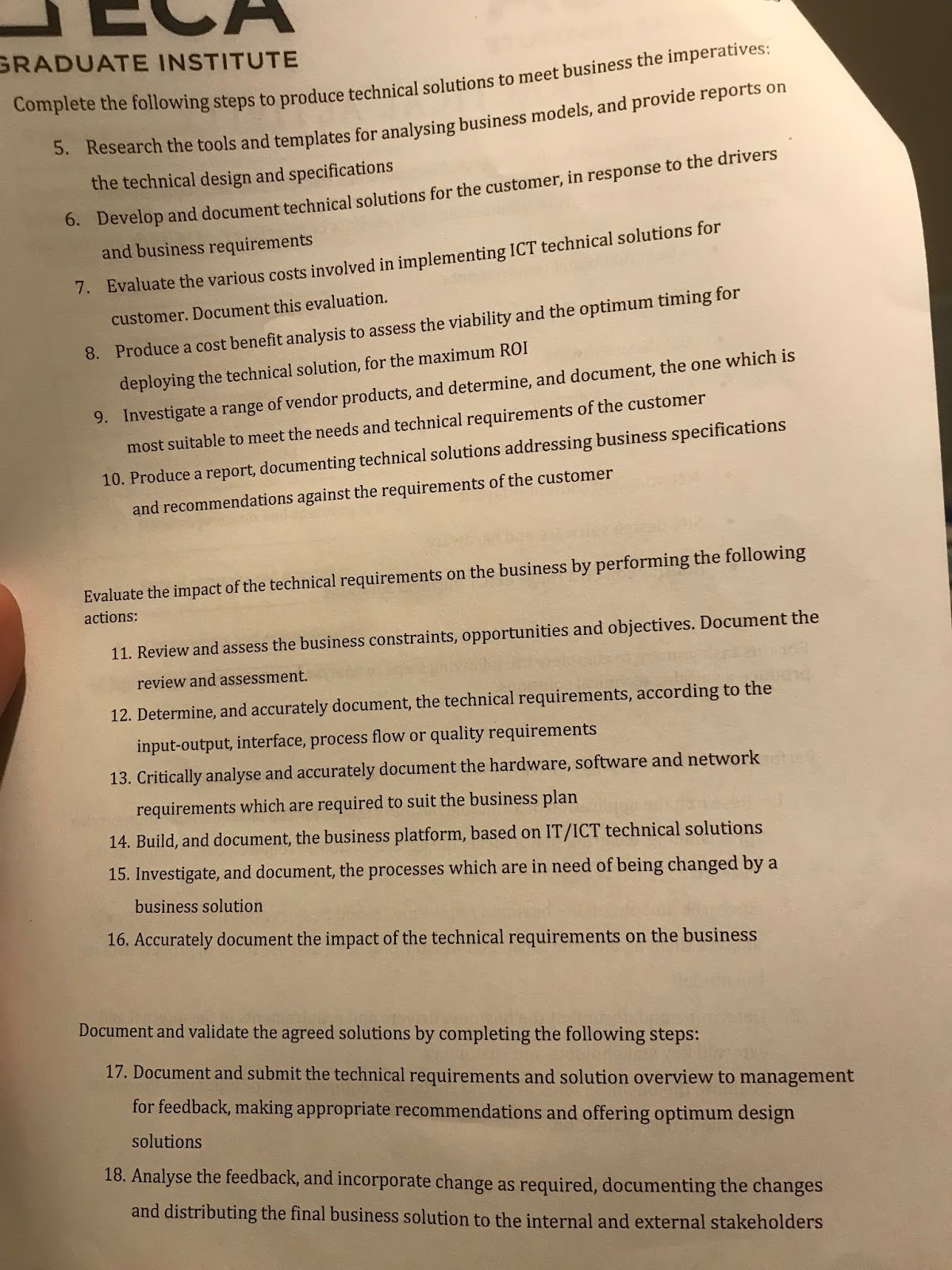
Activity provided by the institute is given in the pictures below:

We have chosen case study on mobile traders for this activity. All the questions have been answered according to that.
Q1. Research the application of a suitable business model for the telecommunication service provisioning, ensuring that it meets the agreed customer requirements. Document the research.

The business model for telecommunication and service provisioning

The active business model of telecommunication services should be including all the factors that boost the functions of the firm. These functions include achieving objectives, management, and governance, generating incomes and reporting and compliance. For mobile traders, the most appropriate business model is a functional focus business model. This model focuses on customer management, infrastructure tools, and finance model tools. It has four management layers and five functional areas of management. These layers involve the business management layer, service management layer, network management layer and element management layer. In five functional areas, there are fault management, configuration management, accounting management, performance management, and security management. Whereas the for the customer management the, business model focuses on customer relationship, target customer, distribution channel, value proposition, and customer preferences. For a proper assessment of finance model tools, there is the usage of data collection tools, budgets, projections, and forecasts. Mobile traders' finances include the cost structure and revenue. The infrastructure tools of the business model for telecommunication and services provisioning is in a wide range. There is a broad network covering business partnerships, value configurations, and core capabilities. The tools may also include contracts, agreements, calculations, and assessments.
Q2. Research and obtain the business requirements and business specifications, critically analyse them against the accepted industry practices and use these to provide data for the model.

Business requirements and specifications

The supplies of business are composed of all the factors that are required to meet the needs of the organizations. It is to make business model profitable, reliable and feasible. Mobile traders for fulfilling their business requirements, need to focus on business application, business plan, existing system, and mission statement. The business application includes main and core functions of the organization. Then the second requirement is a business plan; it involves the registration details, sustainability plans, and risk management strategies. In the existing system of mobile traders, the ICT system, communication system, operational system, and business model system is focused. For the mission statement, organizations form a formal statement that includes the vision of all the desires and aims of the firm. Mobile traders have a wide explanation of specifications. It has four outlets including head office. In its planned specifications all shops will be networked, Email facilities will be provided for all staff, Stock information to be centrally stored for each shop and all shops have access to the information. It also includes the Electronic tills to record sales and interface to stock details and EFTPOS facilities for each shop.
Q3. Determine and document the business drivers and requirements of the internal and external key stakeholders and customers.

Business drivers

Business drivers are the range of processes, conditions or resources that are essential to the continued success and achievement of sustainable growth that applied to an organization. It is essential that all organizations are aware of the business drivers that will impact their organization to enable provision for them in business models that are to be developed. Mobile traders' business drivers include stakeholders, development team, project team, users, sponsors, and key stakeholders. When preparing to make the identification of mobile trader's business requirements, it is important to identify and explain the role of internal and external stakeholders relevant to the activity. It is essential to understand the roles of internal and external stakeholders in relation to the gathering of data relevant to the identification of business requirements in relation to ICT. The internal and external stakeholders include reporting, decision making, and analysing information conducting activities, and conducting different work tasks. To identify the roles of stakeholder relevant to the identification of mobile trader’s business requirements, it will be necessary to conduct a stakeholder analysis of each group of stakeholders within the mobile traders.
Q4. Evaluate the business objectives and customer requirements for input into the model. Document this evaluation.

Business objectives

Business objectives of mobile traders can be identified through analysis of the organizational strategy and related strategic plans. The business objectives are the range of goals and focus that the organization has. The organisational strategy allows the organization to grow in the direction that has been planned. It is a plan of action that has been designed in order to achieve a specific goal or resolve a specific problem. A strategic plan is an internal document used to communicate and explain the organization's goals and objectives, each of the actions that need to be carried out in order to achieve these goals and all of the other critical planning steps and elements related to the organizational goal in question. The objectives of mobile traders set out by the organizational strategy. It provides business goals, growth goals, marketing plans, and goals for the future. For mobile traders, the customer requirements are all the factors that they need in order to maintain satisfaction with the organization. It is related to the price, product features, accessibility, and reliability. The customer requirements of mobile traders can be analysed through similar markets, statistical analysis, and customer feedback. Customer requirements of mobile traders include the availability of technology, performance plans, and parameters of resources. It also involves quality assurances, legal policies and continuous improvement in standards.
Q5. Research the tools and templates for analysing business models, and provide reports on the technical design and specification.

Tools and templates for analysing business models

There is a range of tools and templates that can be used for analysing business models and these can be used for providing reports on technical and design specifications. Research tools and templates may cover action research, case study, experiments, mathematical models and stimulation, interviews, participant observations, statistical data analysis, surveys, and questionnaires. The technical design may be related to the technical elements that the organization needs to meet in order to make sure that the models developed will be supported by appropriate technology. Technical specifications are the range of parameters, requirements, and features that the technical design needs to have. A range of data can be collected from collaboration with other experts or mentors; these professionals may be able to provide other perspectives and other ways of looking at the information collection process. Other experts or mentors may have a range of further information that can be collected as a part of the research program. Mobile traders can also analyse the business models through physical items analysis which is the strategic review of physical items in order to obtain further data and information about a physical item.
Q6. Develop and document technical solutions for the customer, in response to the drivers and business requirements.
Technical solutions are the solutions related to technology that a business can use for meeting the needs of the customers. Technical solutions may not necessarily be related to technology but they can be related to management, implementation and the use of technology.
Some of the technical solutions for Mobile Traders are:
·       Mobile Traders are having 4 shops, having different products at different times. Hence, it is important for them to have stock information stored centrally. All the stock information of the shops must be stored and all the shops must have access to this information. Database management software is used for this purpose. Oracle DBMS is one of the most popular software which can be used by Mobile Traders.
·       Electronic Cash Registers will be used for recording the sales and interface to stock details and Electronic funds transfer at point of sale (EFTPOS) facilities shall be provided for each shop. Point-of-sale terminals and other such machines can be used for it.
·       Websites should be developed for the customers which will be connecting company with the customers. Website developers and Website hosting services will be used while creating a website.
·       Security majors shall be taken for the prevention of the interference of unauthorized users in the confidential material of the company. These majors could be some malware software, such as CCleaner or Avast etc.
·       Safe computing environment shall be provided to the employees and access to sites should be controllable. This can be gained by getting Role-based access control (RBAC). There are different software which helps you in gaining RBAC. The basic model of RBAC is
Source: The Rubik's cube model: A metadata-driven approach to access control in modern ECM systems (2014)
Q7. Evaluate the various costs involved in implementing ICT technical solutions for the customer. Document this evaluation.
COST EVALUATION TECHNIQUES
Cost-Benefit analysis should be used in evaluating the cost of the solutions. In this analysis cost is compared to the benefits it is providing. After this evaluation business must decide which solutions are they going to use in solving their businesses.
For implementing these solutions a lot of traditional things will be changed. Hence, employees require training for using the stated ICT products and services. Along with that, further licensing will be required for using the software.
Oracle DBMS
Pricing of Oracle DBMS solutions is between $92-$460 for personal use and $4,750-$47,500 for businesses.
Electronic Cash Register:
Casio SES10 Entry Level Cash Register with Single Station Thermal Printer is one of the feasible options for ECR. It costs around $285 and an EFTPOS of CommBank offers different fixed rate plans, ranging from $29.50 per month and so on. 
Website Development and Hosting
The cost of website development is different and depending upon the requirements of your website. Here is a website cost calculator which is giving a rough estimation of the costs that may incur according to the features.
 Avast Antivirus Software
The cost of avast antivirus with all the features included is $69.99 per year.
Some more employees will be required for implementing all these solutions. Hence, some hiring cost will also be incurred in the process.
Q8. Produce a cost-benefit analysis to assess the viability and the optimum timing for deploying the technical solution, for the maximum ROI
Cost
Benefits
Oracle DBMS $4,750-$47,500
Automated database system, cloud storage, backup, and recovery, database support
ECR $285
Speeding checkout time, accuracy, security, inconvenience, and training
EFTPOS $29.50 per month
Efficiency and lower labour costs, lower risk of theft, fast transactions
Website $750 - $2500
Satisfaction, increased customers, long-term clients, access to information.
Avast $69.99 per year
Secures computer, protects your computer from malware etc.
Q9.Investigate a range of vendor products, and determine, and document, the one which is most suitable to meet the needs and technical requirements of the customer.
There are various vendors available for all the products. Oracle has been chosen for the database management products because it is one of the most reliable software and is trusted by most of the organizations.
Casio SES10 Entry Level Cash Register with Single Station Thermal Printer has been chosen for ECR because Casio is one of the most trusted organization and most of the organizations use their ECR systems.
Avast is one of the leading antivirus software. From individual people to organizations all of them trust Avast and works with it due to its feasibility and trustability.
Q10. Produce a report, documenting technical solutions addressing business specifications and recommendation against the requirements of the customer.
·       Easier access to the information is required by customers for which website will be developed and Mobile Traders can also start their own call-center or they can outsource call center services for their organization.
·       Customers need to know which stock is available and where having a Database management system will help the organization in fulfilling that requirement with a lot of ease.
·       Electronic Cash Register is going to help the customers in knowing their amount of sales and also brings a trust factor for the customers. Since there is no interference of the human and so there will be fewer mistakes.
·       Having a website helps a business in getting more business, by getting more customers through the search engine optimization. Websites give access to information for the customers as well as the business itself.  
Q11. Review and assess the business constraints, opportunities, and objectives. Document the review and assessment

1.1.  Business constraints, opportunities, and objectives

When analysing business specifications to produce technical solutions, it will be necessary to evaluate the impact of technical requirements on the business. As a part of this the business constraints, opportunities, and objectives will need to be reviewed and assessed. Business constraints are all of the factors that apply to the organisation that provides some kind of restriction, parameter or boundary. Business constraints include resources access, technical capability, finances, skills and knowledge capability of the organization and compliance with the needs of the organization. The business objectives are the goals and plans of the organisation; it is important to make sure that these are suitably quantified and that the objectives of the organisation are able to be achieved using the particular technical solutions that have been developed and put forward. Business opportunities are all of the factors that the business is able to achieve, access or use in order to enable them to reach their objectives. Mobile trader's business opportunities relate to networking, profit, market changes, growth, and partnerships. It is important to make sure that all of the business constraints, objectives and opportunities are reviewed and assessed to make sure that they are quantified, reported, investigated and measured.
Q12. Determine, and accurately document, the technical requirements, according to the input-output, interface, process flow or quality requirements
It will be necessary to determine the technical requirements according to the input-output, interface, process flow or quality requirements. The input-output for the organisation are all of the factors that need to be applied, implemented or used in order for the organisation to be able to get out or achieve the desired results. A system will have a range of system inputs and outputs, and these will need to be carefully assessed in order to determine the technical requirements that apply to them. A process flow is a manner in which a process that is conducted flows through the ICT system and the organisation. It will be necessary to map the process flow and then to assess what technical requirements apply to each of the processes that will need to be conducted in order to complete the processes to the required standard. The management of quality within an ICT organisation is extremely, and it will involve a range of data monitoring and collection of information from the system, it will be necessary to make sure that all quality requirements are assessed and investigations are conducted into them in order to identify what technical requirements apply to each specific requirement. Once all of the technical requirements that apply to the input-output, interface, process flows and quality requirements have been determined, it will be necessary to ensure that these are clearly documented so that they may be included in final technical solutions that are to be implemented into the organisation.
Q13. Critically analyse and accurately document the hardware, software and network requirements which are required to suit the business plan.
Hardware requirements:
·       Computer systems will be required for the employees.
·       Internet routers will also be required for assessing the internet.
·       LANs and WANs might be required for some of the solutions.
·       Electronic cash register and payment at the point of sale machine is also required.
Software requirements
·       Avast Antivirus software is also required for implementing the stated ICT solutions.
·       Different software for the communication between the employees and shops will be required.
·       Oracle DBMS is the requirement for the implementation of the database management system.
·       Website hosting is also required and so is the Web Domain.
Furthermore, new employees shall be hired. An IT department has to be maintained which can manage all these software and make changes according to the requirement of the business.
14- Build and document the business platform, based on IT/ICT solutions 
The Cloud Computing IT-based platform will support the development, testing, deployment and of all the applications and service. For Mobile Traders, the business platform based in IT Solutions would give the company a holistic approach to an automated and an integrated environment, enabling them to grow to the next level.  The Business platform will be based on the following factors
·       Suitability
·       Accessibility
·       Price
·       Required Features and Functions
·       Configuration
·       ICT Hardware and Software needs
·       Organizational needs 
The following components would be needed by Mobile Traders for the implementation of the platform:
·       A Hardware
·       A Browser
·       An application
·       A virtual machine
15- Investigate and document, the processes which are in need of being changed by a business solution
In order to leverage a successful business platform, there are a number of processes that would be changed at Mobile Traders to improve the performance, reduce costs and enhance profitability. It will be very important for Mind Traders to ensure that the processes that need to be changed are comprehensively investigated. The business process at Mobile Trader can be broken down into three different types
Operational
This creates a value stream and consists of the core business activities. This may involve invoicing the products, updating the employee information at Mobile Traders
Management
For Mobile Traders, this would include employee oversight, budget, and corporate governance
Supporting
These are all the activities that support other processes at Mobile Traders such as technical training, accounting, and finance and recruitment
Other processes that would be needed to change are
·       Database design
·       Configuration management
·       Hardware and software
·       Infrastructure
·       Application Hosting
16- Accurately document the impact of the technical requirements of the business
When documenting the impact of technical requirements, there are a number of factors that should be considered at the Mobile Traders
A descriptive detail of the requirement
The company aims to come up with a business platform that will support the business processes in a highly effective manner, ensuring that the business activities are carried in a highly effective way, minimizing the errors and increasing profitability. This system would require the company to implement a change management program
17- A description of how the requirement would be attained is achieved with the help of a technical solution
The requirement would be attained by introducing cloud software that would be based on information technology. This would be attained by implementing a change management program. This would involve training the employees and giving them all the necessary skills that would be required to handle the new cloud-based system. Without essential training, the staff would be unfamiliar with the new system and hence, this would lead to a number of errors. Nevertheless, a trained workforce would prove to be an essential asset to Mobile Traders. The technical solution here is the cloud-based system.
The cloud-based system at Mobile Traders will offer a number of advantages for the company. The impacts are as follows
Cost Savings:
This is the most vital benefit which in terms of cost savings. With cloud computing, Mobile Traders can significantly save on capital costs with no in-house storage or application requirements.
Reliability
A managed service platform makes cloud computing a reliable business platform, which is more consistent than the in-house infrastructure. Mobile Traders can be benefited from a large pool of redundant resources along with a quick mechanism.
17- Document and submit the technical requirements and solution overview to the management for feedback, making appropriate recommendations and offering optimum design solutions.
Recommendations to the manager
For an effective implementation of the system, the following recommendations could be made
·       The management must conduct an effective market research before implementing the new system
·       The management must make sure that the system is tested before going for a complete launch
·       The management must ensure that the cost of implementing the system is less than the benefits
·       The management must make sure that the users are well aware of the system before they could use it
·       The management must make sure that the system provides long lasting and profitable solutions to the Mobile Trader
·       The management must ensure that the cloud computing system achieves its objectives
18- Analyze the feedback, and corporate change as required, documenting the changes and distributing the final business solution to the internal and external shareholders.
The final outcome must be beneficial for the stakeholders. The stakeholders are the ones who are affected by the organizational outcomes.  The stakeholders would be given a formal proposal where the company would introduce the system of cloud-based. The proposal would high light the benefits that it gives to the company and what benefit it would give to the stakeholders.